Newsletter · Issue 1
The four lines that get a cold email answered
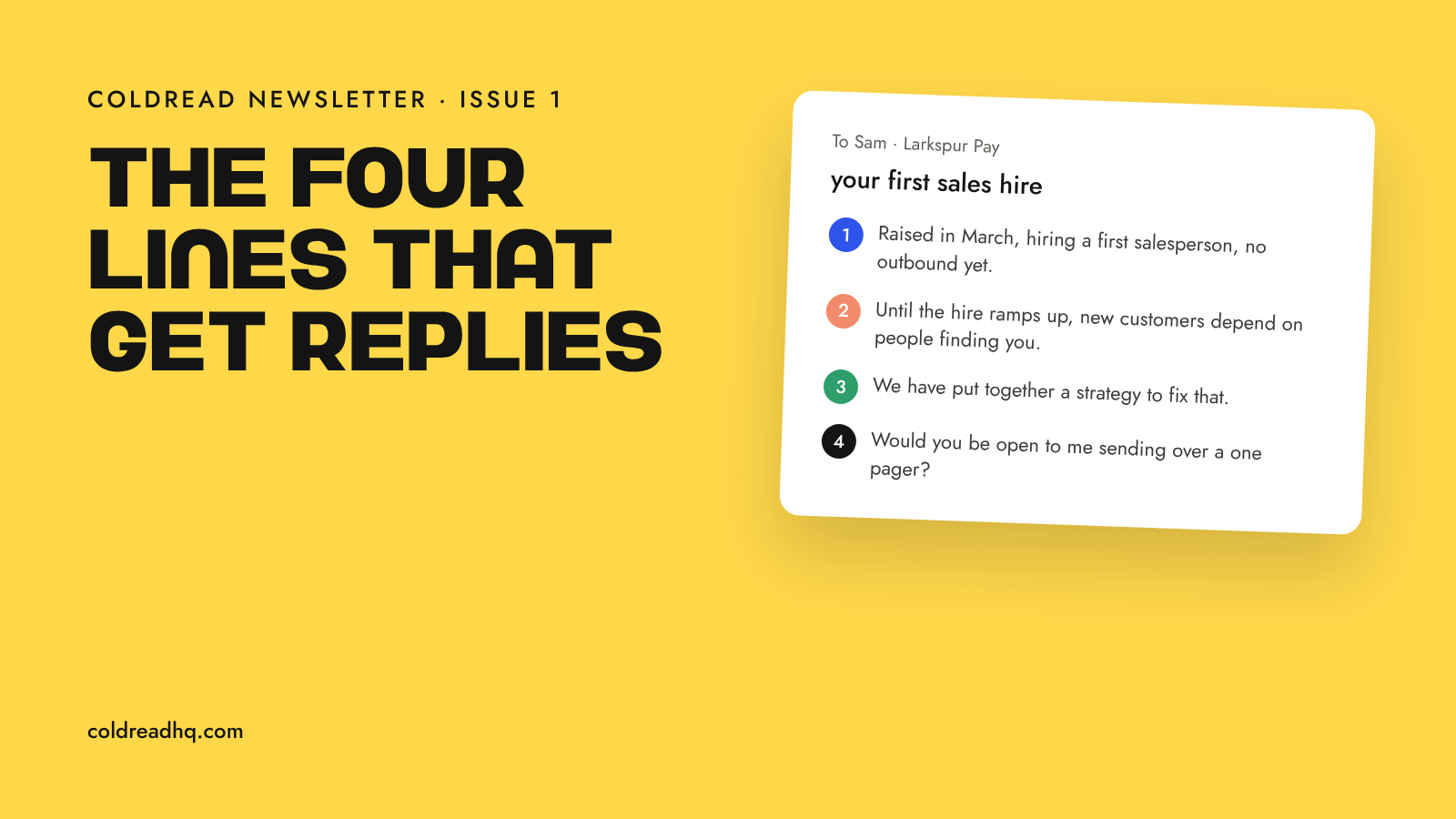
Most cold emails are ignored in the first sentence. Here is the short structure we use for every email Coldread writes, and why each line is there.
The Coldread team · 23 October 2026 · 2 min read
A busy founder decides in about two seconds whether to read your email. They glance at the subject, the first line, and how long it looks. If it looks like a pitch, it is gone.
So the email has one job: look like it was written for them, by someone who did their homework. Four lines are enough to do that.
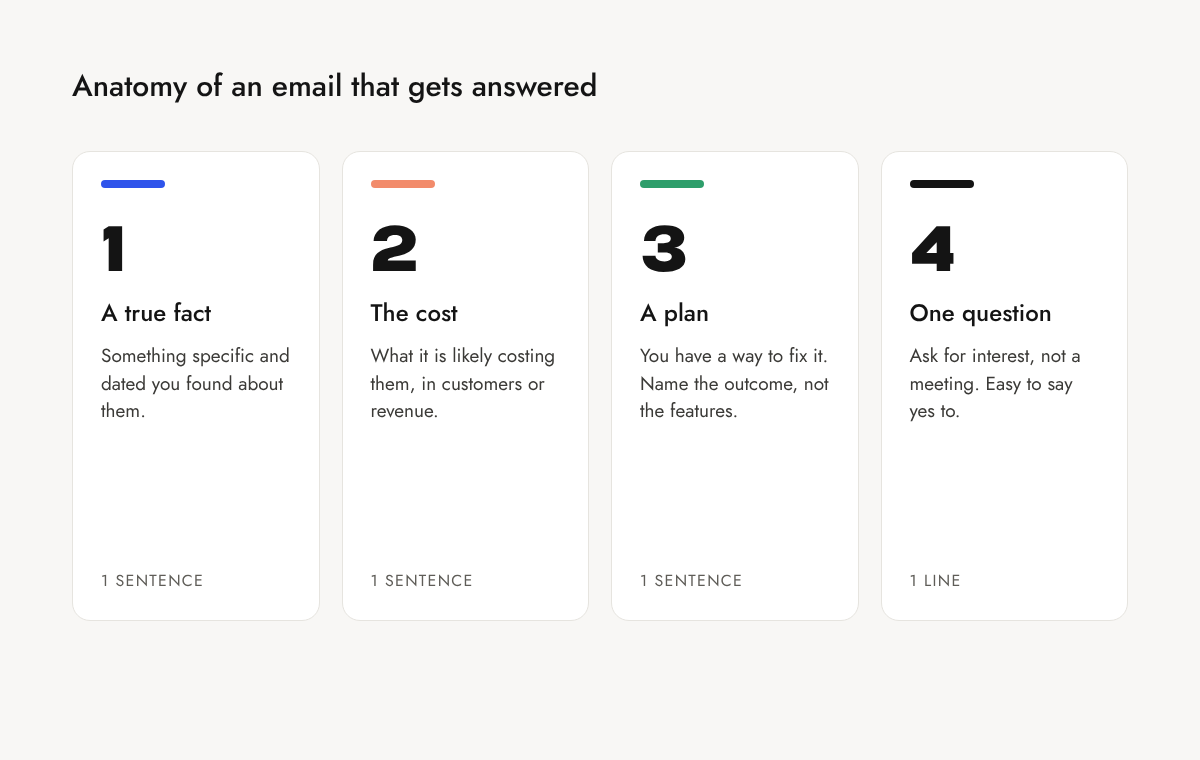
1. Start with something true about them
Not a compliment and not "I came across your company". One specific fact you found: a hire they are making, a launch, a gap on their site. A fact with a date or a number reads as research. A compliment reads as a template.
Larkspur Pay raised its seed round in March and is hiring a first salesperson, but I couldn't find any outbound running yet.
An opening line Coldread wrote
2. Say what it is probably costing them
One sentence, in their terms: customers, revenue, time. Keep it believable. A made up number breaks the trust the first line earned.
3. Offer a plan, not a product
Say you have put together a way to fix it, and name the outcome. Do not explain the plan and do not list features. The reply is where the detail goes.
4. Ask one easy question
Ask for interest, not for a meeting. "Would you be open to me sending over a one pager?" is easy to say yes to. "Can we book 30 minutes on Tuesday?" is not.
What to leave out
- Links and attachments. They make spam filters suspicious and add nothing to a first email.
- Prices. They belong on the call.
- "Just following up" in the first email. There is nothing to follow up on yet.
- Long signatures with banners and social icons.
This is the structure Coldread uses by default, called Straight to the problem. If you prefer something softer, there are two more in Settings, or you can write your own.